How to Survive a Scary Movie

by Harry Sweetditch

Have you ever been invited over to a friend’s house only to have them decide that a fun way to spend time as friends is for all of the friends together to watch a movie that will convince your bodies that they’re going to be killed?

Did you feel like maybe your particular body didn’t want to feel like it was going to be killed?

Did you worry that the experience would be so intense that your brain would replay the terrifying events of the movie again and again late at night when you were trying to sleep?

Did you worry that the only way you would be able to handle your sleepless terror was to make and consume a pitcher of “poor man’s margarita” out of lemonade and your available liquor, because you’ve taught your brain that the anesthesia of alcohol is the best way to deal with trauma?

Did you worry that the only alcohol left in the house was a licorice-flavored Greek liqueur, “Ouzo”, left over from Easter, even though no one in your family is Greek?

If so, here are some helpful tips that will help you through the experience of watching a scary movie:

-People are unsympathetic when adults can’t handle scary movies, but they’re generally fine with not scaring children to death. See if you can convince your friends that you’re actually a ten-year-old child.

-Before the movie begins, let everyone know that you’ll probably have to make a bowel movement during the movie, and that the bowel movement will probably take about two hours, due to some problems you’re currently working through with your gastroenterologist. Call the bowel movement a “bowelie”. This is a jocular term for a bowel movement that I’d like to see catch on.

As soon as the scary stuff in the movie starts, say “Uh-oh”, and get up and go sit in the bathroom for the next two hours. While you’re in there, you can choose whether or not you’d like to actually make a bowelie. It’s up to you. The beauty of this plan is that you’re free to choose.

-Bring cotton balls and a sleep mask with you to every social gathering. As a scary movie starts, you can trigger the smoke alarm and evacuate the house by piling the cotton balls on the mask and setting fire to them.

-If you have time to prepare, see if you can develop a friendship with some of the wild rats in the area. Once you’ve gained their trust, it will be easy to convince them to infiltrate your friends’ house and gnaw through important wires in their entertainment system. Explain to them that, yes, some rats may die during this assignment, but allegiance to your cause requires sacrifice. If this plan incurs heavy losses, the rats will rebel. Be prepared. If you don’t have the stomach to put down a rat rebellion, you may need to move to a new city, as rats are vindictive, stubborn, and will always talk shit—they will not let the issue drop unless you completely dominate them. However, moving may be a blessing in disguise, as your new friends in your new city will almost certainly be cooler than your old friends and won’t make you watch scary movies.

-Hide drugs in your friend’s house (maybe in the refrigerator? do drugs go bad? do people keep drugs in the refrigerator?). Call the cops and tell them that your friends are planning to give a child some drugs as a birthday present. Your friends will be unable to make you watch a scary movie if they’re in jail.

-Suggest that if everyone’s interested in a scary movie, maybe you should all watch a documentary about hive collapse disorder. This plan entails some risk, since I’ve personally found that these documentaries are terrifying. However, your friends will probably just force you to leave the gathering, and you’ll be able to spend your night at home, doors and windows locked and bolted, the cold steel of your shotgun barrel caressing your face as you sleep.

-Try taking a deep breath and asking yourself why most people can watch a scary movie without it ruining their lives. Unpack your fear and try to locate whether or not you’re reacting to some trauma. Try to observe your immediate reaction to your fear and ask whether or not it’s rational. It may be helpful to contact a mental health professional, priest, pastor, or other religious advisor, and distract yourself in conversation with them until the movie is over.

-A follow up to a previous suggestion: if your friends don’t seem convinced by your claim that you’re working through some bowel trouble with a gastroenterologist, you may need to provide some additional proof. You can visit my site and find a very convincing forgery of a doctor’s note which states that you are licensed to take two-hour bowelies. The note comes in PDF format, can be accessed after one payment of $4.99 and downloaded as many times as you like.

-Petition Satan to kill your friends. He’s fairly approachable on this issue.

How to Survive a Scary Movie

An Interview

by Crane Stompard

I was working as a dishwasher when I had the idea to interview for a teaching position back on the east coast.

(My sister, who reads all my work before publication, tells me that a former high school teacher of mine sent me an email about a teaching position at a private school in Philadelphia. So she’s making me say that it wasn’t my idea.)

But I did have the idea to find another school in the area and interview there as well. I had to buy a plane ticket anyway, I figured.

(My sister says that she actually suggested that I interview at the school in Lancaster in order to put the plane ticket to better use. Further, she says that I have no ideas, and do whatever anyone tells me to. Debatable.)

I was a dishwasher who had recently almost graduated from college. “Recently” because I’d completed all of my coursework just a month prior. “Almost” because I hadn’t finished the required thesis. “Dishwasher” because I had the exact credentials necessary for the job—an almost complete Bachelor of Arts degree.

However, my tutelage under Kingston (see the previous post about his wonderful influence on me here), and my whole-hearted acceptance of his controversial belief in subtext proved a difficult pill for the first school with which I interviewed. The Private School in Philadelphia seemed to be fully embroiled in the battle against the notion of subtext. I had no idea that the very ideas of which I’d been drinking so deeply had aroused such a terrible ire in the educational community.

The board of The Private School focused directly on my relationship to Dr. Kingston’s work. They asked me to give an example of the sort of work I’d do with my students, if accepted to the position of 10th Grade English Teacher.

“I imagine that I’d choose something exciting, something on a larger scale, perhaps Big Trouble in Little China, or maybe Big with Tom Hanks, or even Pee Wee’s Big Adventure. Then I’d show them how subtext operates out of sight in a text, underneath the obvious elements that we all see and acknowledge.”

The board members looked confused. A doddering woman of nearly 40 summers raised a frail hand.

“But those are all movies from the 80s,” she said. “We’re a school with classical leanings.”

“I see,” I said. I nodded and narrowed my eyes. They were a shrewd bunch here at The Private School. “How about Dustin Hoffman’s 70s classic, Little Big Man?”

“How about something by Austen?” a simpering man in a sweat-stained polyester button up from K-Mart said.

I happened to have recently viewed Emma by Jane Austen, and had a full subtextually driven lecture in my proverbial back pocket, with special reference to Gwyneth Paltrow’s faltering accent as proof of the movie’s meta-critique of capitalist systems and society. I unleashed this. I spoke with great passion, and in my reverie may have drifted into some rather provocative (even crude) language, especially in my descriptions of several of the picnic scenes.

When I was finished, they had relatively few questions. They told me that it seemed like I had no actual understanding of literature, that no one actually practiced in Marxist critique called it “Communist”, and that my obsession with Dr. Kingston’s theories was probably not going to stand me in good stead professionally.

“Ahhh, it comes out,” I said. “Academic jealousy.”

They denied it.

“Oh, please. You’re threatened by the idea of subtext, and our scathing communist readings. But Dr. Kingston and I, we’re going to shake things up. We’re going to shake the world up. Like a can of paint. We’re going to put the world into one of those crazy paint shaking machines like you see at Home Depot, and that paint shaking machine represents our theories, and it’s going to shake you until the new colors of our theories work their way through the entire can of paint.”

“So your theories are the paint shaking machine and the new colors?” the simpering man asked, his sweat soaked shirt sticking to his ribs.

“And they’re also the paint that we’re going to paint the world with!” I said. “A deep Communist red.”

“Are you a communist?” the woman of 40 asked. This interview had so strained her that she now appeared to have aged to at least 42.

“I though the world was the paint can,” the simpering man simpered. He dripped a shower of sweat onto the floor, and the noise, similar to the soothing sounds of the rainforest, threatened to lull me into a capitalist dream. I could see a quotidian existence stretch out before me. I could see myself floating through the haze of McDonalds, McMansions, McWalmarts, McStarbucks, and McWendys. But it was daybreak, and I wasn’t about to sleep. Not anymore. I called upon my inner resources and blocked out the sweet liquor of the sound of sweat trickling on tile. I stood up.

“It doesn’t matter what the paint can stands for. This interview has ceased to matter. I’m going to throw off the yoke of oppression of this interview and leave. I’m going. Thank you for your time.”

The room rang with the conviction of my words, the conviction like a dry wind in the room, evaporating the pool of sweat on the floor, and leaving a fine, dusty layer of salt. The simpering man himself may have actually become a pillar of salt, but I will never know because I never looked back. (My sister says that it is extremely unlikely that he actually became a pillar of salt, but I reminded her that God’s ways are not our ways. She probably then said something about me being proof of that, but I didn’t hear it because I’d already turned on my Echoes of Nature: Rainforest CD full blast.)

As I drove back to my parents’ house in their blue Dodge Dynasty, I thought about the subtext of the interview. They’d primarily attacked how little I seemed to have read, and how I seemed focused on movies from the 80s in lieu of proper literature, and how I had absolutely zero knowledge of teaching techniques and classroom control.

But I knew the truth. As a master of subtextual reading, I could see that they were well aware of the threat Dr. Kingston’s radical theories posed to their cushy way of life as well-fed capitalist pigs living on their exorbitant teachers’ salaries. They were scared of subtext, and had every right to be.

An Interview

Great Ideas for Interacting With Cashiers

by Harry Sweetditch

Basic daily interactions with other humans can be trying. Listening to, and then answering questions? Talk about exhausting! Because you don’t know what a given Cashier might be thinking about you, just the act of paying for the food that sustains you can require every ounce of concentration and anxiety you can spare, requiring additional sustenance, requiring additional interactions with cashiers, and thus plunging you into a vicious cycle. The smart shopper prepares.

You know the standard lines—“Nice day” or “Tasteful tattoo” or “Man, I sure could go for a DVD from Redbox”—but we call those “standard” for a reason.  Using one of those will notify your cashier that you’re dull, one of the relentless throng they deal with all day, every day. That you are a willing participant in mass culture is the last thing you want to expose to anyone in the service industry. They view it as a sign of weakness and may become aggressive, demanding, or aroused. 

Here are some tips for handling Cashiers and overcoming the “cold-sweat-diarrhea-panic” that a payment-type situation provokes:

Engage them before they engage you

Having to answer questions like “Doing anything fun today?” or “Got plans for the weekend?” is not a tolerable option. To ensure that I’m in control, I like to start the conversation before I even pass the tabloids. If there’s a line, and the customer in front of you is chatting with your future Cashier, look for lulls during which you can interject.

Does that idea make you uncomfortable? The world isn’t going to wait on you. You have to make your own destiny. The petty rules by which you used to live must be shed if you’re going to survive this contest with the other, your Cashier.

Offer to barter

No grocery store will actually allow you to barter other goods or services in exchange for groceries, no matter how attractive the offer, or how persistently you pursue your offer with the assistant manager, branch manager, or regional manager. They seem to be of a single mind on this proposition. They’ll only accept fiat currency, the collective dream from which we all refuse to wake. But if you merely offer to barter, you’ll find yourself putting your Cashier well off her footing, to the extent that you shouldn’t have to endure further, grating conversation.

Try this: “I make fine mahogany duck decoys. They’ve been valued at $50 dollars a piece by experts in the field. Will you accept two of them as a substitute for legal tender in payment for these $80 dollars of groceries?”

Your Cashier’s stunned silence will be your reward.

IMPORTANT NOTE: You may want to keep a few mahogany duck decoys around, just in case you get a bite. Nothing is worse than being found out by a Cashier in an out and out lie. The balance of power can never be restored. You can purchase decoys from me, via my site. Cost is $50 per duck. Boy and girl duck models available. Bow indicates girl duck. Absence of bow indicates boy duck.

Intentionally offend the cashier

This may seems just a bit counter-intuitive, and unnecessarily rude. But you didn’t come to this how-to to be coddled, did you? You came to learn mastery of yourself and your Cashier. But, as you’ll see, we’re not going to leave them in a state of insulted despair.

I recommend going after your Cashier’s name. In most grocery stores, your Cashier will have a name tag, and will be especially vulnerable because of this. Try this:

*Cashier’s name tag reads “Mark”*

“‘Mark’, huh? Is that what passes for a name, nowadays?”

When your Cashier responds with a look of hurt, let the look register with you. Let your hard glare soften. Apologize and offer to make it up to your Cashier. Produce a fine mahogany duck decoy you “just happen” to have with you. Give it to your Cashier as a token of your forgiveness. The craftsmanship of the duck will awe your Cashier, and his silence and willing obeisance will be your reward.

Learn to carve fine mahogany duck decoys

Some folks have found that keeping mahogany duck decoys in stock can be cost prohibitive. That’s why I’ve developed a series of instructional pamphlets and videos to help even rank amateurs learn the fine art of carving mahogany duck decoys. A monthly subscription fee of $49.99 will give you access to all PDFs and videos. In addition, you’ll get constant updates on bleeding edge news about advances in fine mahogany duck decoy carving techniques and equipment, as well the inside line on industry gossip.

Honing your craft, staying up to date, and learning to work outside the system are all part of ensuring a successful interaction with your Cashier.

Great Ideas for Interacting With Cashiers

Very Clever Pun

In the interrogation room, the cops ask Pancho when he last saw Pedro Raskalnikov.

Good Cop: Answer, Pancho. Don’t make him …

Bat Cop: [emits echolocating screech]

Bat Cop turns his attention to the corner of the room. He flies to the corner, finds a moth there, and eats the moth. He turns towards the good cop and Pancho, moth remains stuck to his lips.

The good cop and Pancho both look nauseated.

***

Sergeant Ransom calls Bat Cop into his office and fires him. Bat Cop seems to not understand. He eats another moth.

***

Bat Cop’s wife, Gina, serves him with divorce papers. Bat Cop does not seem to understand the human convention of marriage, and as such is unaffected by his wife’s intention to divorce him. Gina turns away, crying, shocked by Bat Cop’s calloused response to her revelation. Bat Cop flies away.

***

Bat Cop moves into a church attic. He’s discovered there and the sexton makes friends with him. Bat Cop begins attending services. He joins the church on a mission trip to Mexico. People find his unblinking, vacant stare convicting and turn from their lives of sin. He’s responsible for many conversions.

***

One night Bat Cop is eating moths in the sanctuary. The good cop stumbles through the door, distraught. He’s given into the moral ambiguity seemingly inherent in law enforcement, and is far from a good cop. He’s come to the church seeking absolution. Bat Cop’s leathery wings alert the cop to his presence. Bat Cop stands in front of him. Bat Cop stares into his eyes. The formerly good cop sees himself in the glass orbs, and remembers who he used to be.

The good cop uncovers the corruption of the police department in the city. The police department and crime bosses team up to kill the good cop. The good cop dies a hero’s death.

***

Bat Cop eats moths in the church. He flies in the night sky. He doesn’t remember yesterday. He has no expectations for tomorrow. Bat Cop flies away somewhere else.

Very Clever Pun

Miles to Go

by Crane Stompard

While at school, I came under the sway of a radical teacher who exposed me to the idea of subtext in a work of literature. During a discussion in one class, Dr. Harpo Kingston completely altered my perception of what was possible in literature.

He spoke about Frost’s poem “Stopping by Woods on a Snowy Evening.”

“The narrator tells us that, ‘The woods are lovely, dark and deep, but I have promises to keep, and miles the go before I sleep, and miles to go before I sleep.’ What does he mean by ‘miles to go before I sleep”?

I raised my hand, tentatively, but still managed to elbow the girl sitting in front of me in the back of the head. “That’s the third time today, idiot,” she said, her voice as flat as the voice of the computer speech system through which she communicated with other humans.

“Have you ever seen the movie Alien?” I asked.

Dr. Kingston never failed to hide the thrill he felt at the startling connections my mind made. He was such a gifted actor that he almost seemed frustrated with me.

“Yes,” he said. I knew that he had, since I’d already asked him this question once, earlier that day.

“Well, ‘miles to go before I sleep’ reminds me of when Ripley, that’s the Sigourney Weaver character, goes into suspended animation. Because she’s super far away from home, as in it will take her years to get home, but she gets to sleep the whole way there. I guess it’s a little bit different.”

Dr. Kingston suppressed his excitement at my comments by rubbing his face with both hands and breathing deeply through his nose.

“Not exactly what I was thinking,” he said. The class laughed at the notion of my comments not being exactly correct, since “exactly correct” was clearly what they were. Still, the laughter at Dr. Kingston’s little joke went on for long enough to make me a bit uncomfortable with the extent to which they seemed to idolize me.

“The narrator is referring to the sleep of death. Death is the subtext of the poem.”

This statement completely re-oriented me. I had a sudden realization. Poems, films, and books could be about secret things, hidden underneath the surface. Inspiration flashed.

Alien is a film about communism,” I said.

Dr. Kingston was floored by this statement. It so impressed him that he stretched himself out on his desk, clenched his fists, and cried. I went on.

“The film is about a group of seven (or six, if you like) proletariats oppressed by the concerns of an unfeeling capitalist corporation. The alien creature, known popularly as the Xenomorph, represents the animal natures of capitalism. Capitalism respects the cruelty of the Xenomorph, and wishes to tap into its power at the cost of any number of human lives.”

I went on to explain how Die Hard, Lethal Weapon, Predator, Battleship Potemkin, and Sleepless in Seattle all contained a secret communist message.

At some point, Dr. Kingston and the rest of the class fled the room in amazement. In my reverie, I hardly noticed them leaving. The only audience left was the girl I’d elbowed earlier, since she needed help getting her wheelchair around the chairs I’d stacked in front of the exit.

I never viewed literature the same way again. My eyes had been forced open, like they had been just a few days previous, after a terrible bout with conjunctivitis.

My proudest moment in college was the “passing grade” I received on a paper from Dr. Kingston, in which I described the communist subtext of Turner and Hooch. He returned the paper with the comment “Please excuse the curry stains on pages 2, 10, 11, 12, 13, and 35.” How could I not? He’d done so much for me.

Miles to Go

Scared Stupid

I guess the clincher in the tapestry of motivations that formed my desire to get a bowl cut, was watching Ernest Scared Stupid.

20131122 Tantor-03

My family watched the Ernest movies the way that diabetics urinate—often.

When, in the year of 1992, we saw Ernest Scared Stupid, I learned that comedy could be blended with horror and mythic tropes to create a satisfying dramaturgical experience. I felt that maybe the filmmaking team could have gone easier on the horror aspects of the film. At the same time, my night terrors needed a shot in the arm. They’d become rote and predictable. The villain of the film, Trantor the troll, was a welcome addition.

I’ll catch you up on details of the plot, as the film has fallen out of favor somewhat:

Trantor the troll has an army of trolls at his disposal. But before his forces can be unleashed to take over the world (?), he has to turn five children into wooden statues and put them in special cubbies carved into a special tree. Standard operating procedure. He almost did this in the 1800s, but the townspeople stopped him, and buried him alive, because they’re heartless bastards.

20131122 Tantor-04

Ernest’s family was cursed to someday free Trantor from his imprisonment. And guess-what-he-does. He frees Trantor, who immediately goes out and grabs a kid named Joey.

If the people who cast Ernest Scared Stupid were smart, they chose the actor who played Joey, Alec Klapper, because he was instantly sympathetic. He had glasses and a bowl cut, and for whatever reason, I fixated on this kid’s look. I thought that his look would be a good look for me.

It can be hard to find aesthetic models as a child. Especially achievable ones. When one comes along you have to snatch it up and never let go.

The idea of a bowl cut appalled my mom, probably because she’s a woman of sense. When I was eight, I convinced my hairdresser (I had a hairdresser when I was eight) to let give me a rattail. I then went home with a rattail. My mom’s reaction was such that within an hour of getting a rattail I cut it off myself with our orange-handled Fiskars. The point is, my mom was strongly affected by my grooming choices. My bowl cut had the stink of scandal.

Slight digression: the orange handles are important on the Fiskars. They seem to indicate danger. Scissors are sharp. That makes sense.

20131122 Tantor-02

But it’s weird that the Fiskars people think we need to be warned about the fact that these scissors are scissors. We don’t have to be especially careful around scissors. It’s not like we have to let the scissors know we’re in the same room, or approach them carefully, speaking soft and low. Scissors don’t camouflage themselves in with the knives to ambush you. I don’t know what the orange handles are accomplishing. I like the orange handles, but I can’t claim to understand them. And that bothers me.

Risking estrangement with my mom, I got a bowl cut. I looked in the mirror. I was close. So damn close. But I didn’t have glasses. And that’s when my headaches came to the rescue. My wonderful tension headaches, born of constant reading.

My parents are good people. They were busy people when I was twelve. They also both have professional medical degrees. It took a little while for us to connect the headaches with the reading and to get my eyes checked. I’m not saying longer than it should, since I recognize that part of my impatience definitely stems from how this failure (too strong?) affected my quest for the look I was going for. I had the cargo jeans with elastic cuffs. I had the chambray shirt. I had the bowl cut. How about some glasses, people?

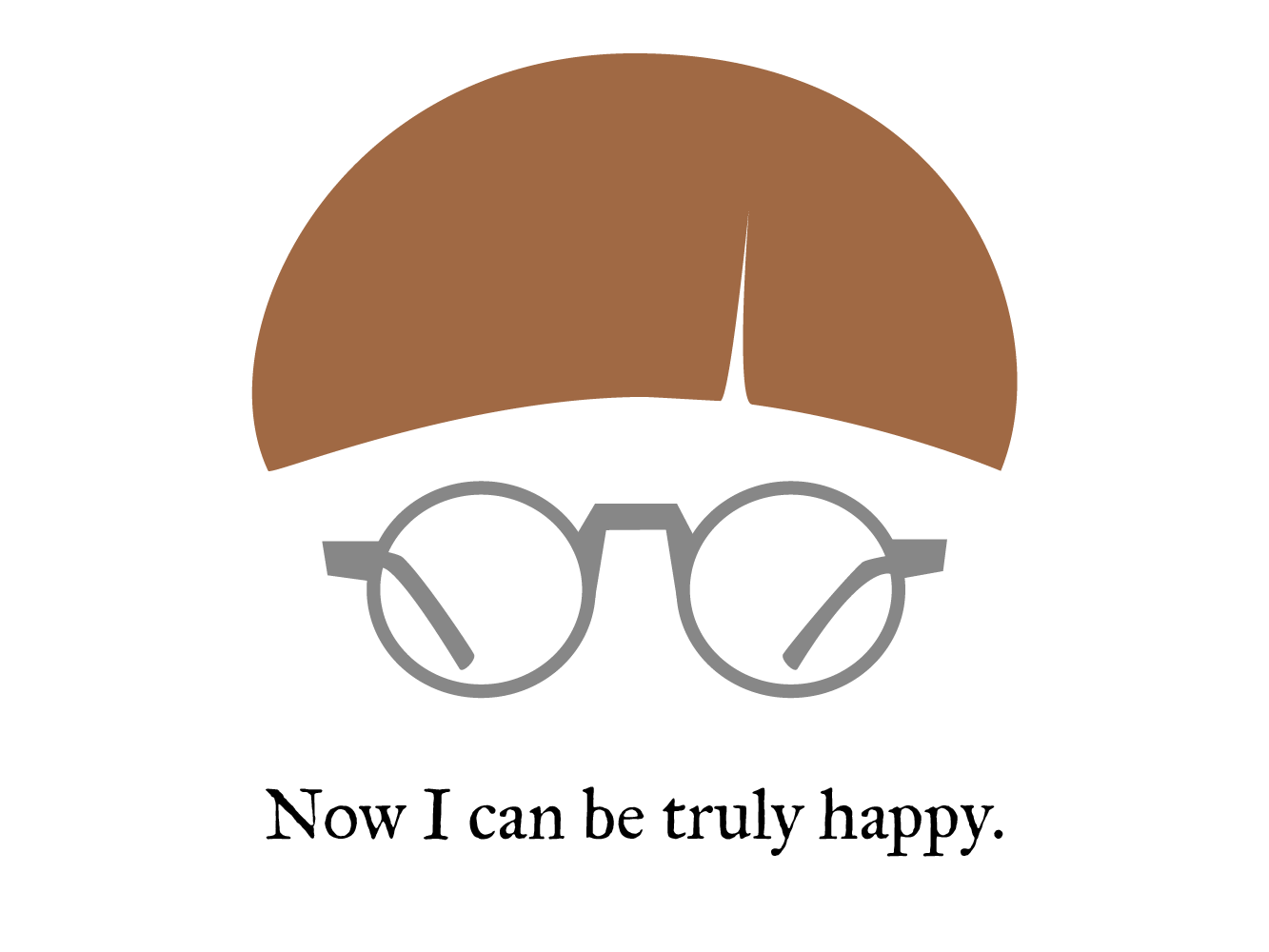
I got the glasses. I put the glasses on. I shook my bowl cut in the mirror. I had done it.

Now, finally, I looked like a kid in Ernest Scared Stupid who wasn’t even the main child protagonist.

At last, I looked like a kid who played a supporting character and immediately got turned into a little wooden statue, immediately, in Ernest Scared Stupid.

Now I could rest.

20131122 Tantor-01

Scared Stupid

Daniel Plainview’s Five Tips for Getting Things Done!

daniel-plainviewThese people at The Atlantic have asked me to share some “tips” about how to get the job done. Plenty of others have tried to explain what it is to be “productive,” but when it comes to the showdown, their words will be swill in the jar. A residue. My writing on the matter has appeared in Wired, The Wall Street Journal, Fast Company, and Huffpo. Work for those and a number of other sites around the web is paying me an income of five thousand dollars a week. Not to mention ad revenue from my own site and consulting service. So if I say I’m a productivity guru, you will agree.

1. Set Achievable Goals!
Here’s a saying of mine that my people hear often: “It’s no good to threaten to cut the throats of your competitors and their families while they’re sleeping, if you haven’t even figured out how to get inside.” The point is, it’s one step at a time.

2. Don’t Forget to Keep it Light and Personal!
I’ve found that it’s easier to deal with people if they have a sweet face to look at. So I keep my Twitter and Facebook feeds full of pictures of my son and partner, H.W. Plainview. Don’t make it all about work and your need to crush the competition. Your want to seem to be a fully rounded human. That’ll let you to get close to people who care about these things. Close to them, close to where they’re weak. Post pictures of yourself joining up with one of the faiths—Bar Mitzvah, baptism, circumcision. Myself, I like them all.

3. Keep Tight Hold of Priorities!
This can be the biggest block to truly getting the job done. When my name got out and my site started blowing gold all over the place, I needed to upgrade my servers. I wanted something sturdy. Something that would last. I had H.W. and my assistant Julian move this great hulking server into my apartment, up the stairs. One thing lead to another, and I’ll be damned if that server didn’t come loose from the dolly, roll Julian down the stairs and crush his head against the wall on the landing. But the server was fine. My priority was sturdiness, and it served me well.

4. Bury Everyone Who Opposes You Underground!
Don’t be afraid to tell the competition what you think. If you intend to crush them, let them know. If you don’t intend to crush them, what in the goddamn hell are you doing?

5. Remember Why You’re Doing It!
Sometimes it can be hard to pull yourself up off the floor in the morning, rinse the stale taste of last night’s whiskey from out of your mouth, and go about your day. That’s why it’s good to remember the point of it all. Myself, I want to earn enough money that I can live off the interest and keep to myself. I’d like to do what I can to unplug from the emails and phone calls. I’d like to earn enough money so that I can get away from everyone. But that’s just me.

That’s all I have. Go away and don’t come back.

Well, except to visit the site, and follow me on twitter. But otherwise, get away.

Daniel Plainview’s Five Tips for Getting Things Done!

Werner Herzog’s Amazon Reviews: “Dora the Explorer: Let’s Explore! Dora’s Greatest Adventures”

When you look into the eyes of an animated character you may sometimes experience the sense of the ultimate blankness of the human. That we can be so easily fooled into respecting the verisimilitude of these dead-eyed renderings is evidence of our total inability to claim an intelligence beyond nature. The suffering of a drawing is silent. The suffering of a drawing is immense. In no other two-dimensional character’s eyes is the suffering felt with more intensity than in those of Dora the Explorer.

Like her predecessor and spiritual kinsman Cortés, Dora is merciless in her exploration, hacking a hopeless path through the malaise of our modern existence. As I watch Dora, each week set in motion by the winds of chaos and school attendance, I am filled with the assurance of the fruitlessness of all attempts at human progress in the onslaught of nature.

The truth of these “mere episodes” of television from Nickelodeon (whose Spongebob is likewise finally about a submerged or utterly drowned existence) is that Dora does not explore an undiscovered world. Instead, she is hopelessly lost in a jungle of mankind’s making, a modern world in which the will to throw off the chaos of nature is felt most keenly, and a will which is still shown to be ultimately useless.

Boots, her monkey companion, is a delight.

But his ultimate use is not as relief from the horrifying onslaught of a child seeking to understand the horrors of her world, but rather as a temporary palate cleanser. Boots, whose red boots recall the bloodied boots of the conquistador, is not a relief from the terrors of existence—instead he merely allows us to taste the salt of suffering anew.

The special features include nothing of interest for the seasoned Dora viewer. Ignore them.

Werner Herzog’s Amazon Reviews: “Dora the Explorer: Let’s Explore! Dora’s Greatest Adventures”

Friendly Dog Wreaks Havoc on Playground

Several weeks ago I saw a happy dog jumping around a playground, running up and down the stairs of one of those conglomeration of slides and bridges and climbing walls. I completely enjoyed watching the dog enjoy himself. But not simply because the dog was following the inscrutable dictates of joy. I enjoyed watching the dog because of the swath of terror he left in his wake. The dog didn’t frolic by himself around an empty playground. It was occupied, and nearly full. Children screamed. Mothers screamed. Children and mothers together fled in terror. It was a scene like something. A grown man pointed and shouted and shooed. “Go away, dammit,” he said, in shaking voice. He tried other line readings. “Go away, dammit. Go away, dammit.”

Nothing about the situation looked dire to me. But clearly no one on the playground owned the dog. His enthusiasm was upsetting for everyone. If you’re interested in keeping things humane, as everyone on the playground was, there’s not a lot you can do to discourage a happy dog from his happiness. Dogs are notorious for their disregard of strong language.

The man eventually stepped his game up to stomping. He blocked the dog’s path across the bridge leading from slide to another. He stomped at the dog in imitation of violence. This heightened the dog’s experience of the moment. The dog popped himself onto his hind legs and then brought his front paws on the bridge, in mimic of the man’s stomping.

The dog’s unswerving interpretation of every act of discouragement as an act of play made the man’s hostility ridiculous.

The dog bolted for the ground. The man ran down the stairs. He blocked the dog’s progress again. The dog stomped for him again. The man made throwing gestures at the dog. The dog followed the motions. The man yelled and pretended to throw handfuls of nothing right at the dog’s head. The dog snapped its head around to catch the nothing. The man began to change the arc of his throw. The dog continued to follow it, first with his eyes, then, as the man began to pretend to throw nothing further, the dog ran a little ways toward where he judged the nothing would fall. Then he ran back to the man and dropped nothing at his feet. The man pretended to pick it up. He threw it again. As the dog ran out it happened across a stick. He picked up the stick, assumed that this is what they’d been pretending to throw. He brought it back to the man. The man threw it and the dog brought it back. Eventually the dog got tired of this and left.

The dog saw the situation as play. The man saw it as conflict. The dog’s view of things won.

Friendly Dog Wreaks Havoc on Playground